
Last updated November 22, 2026
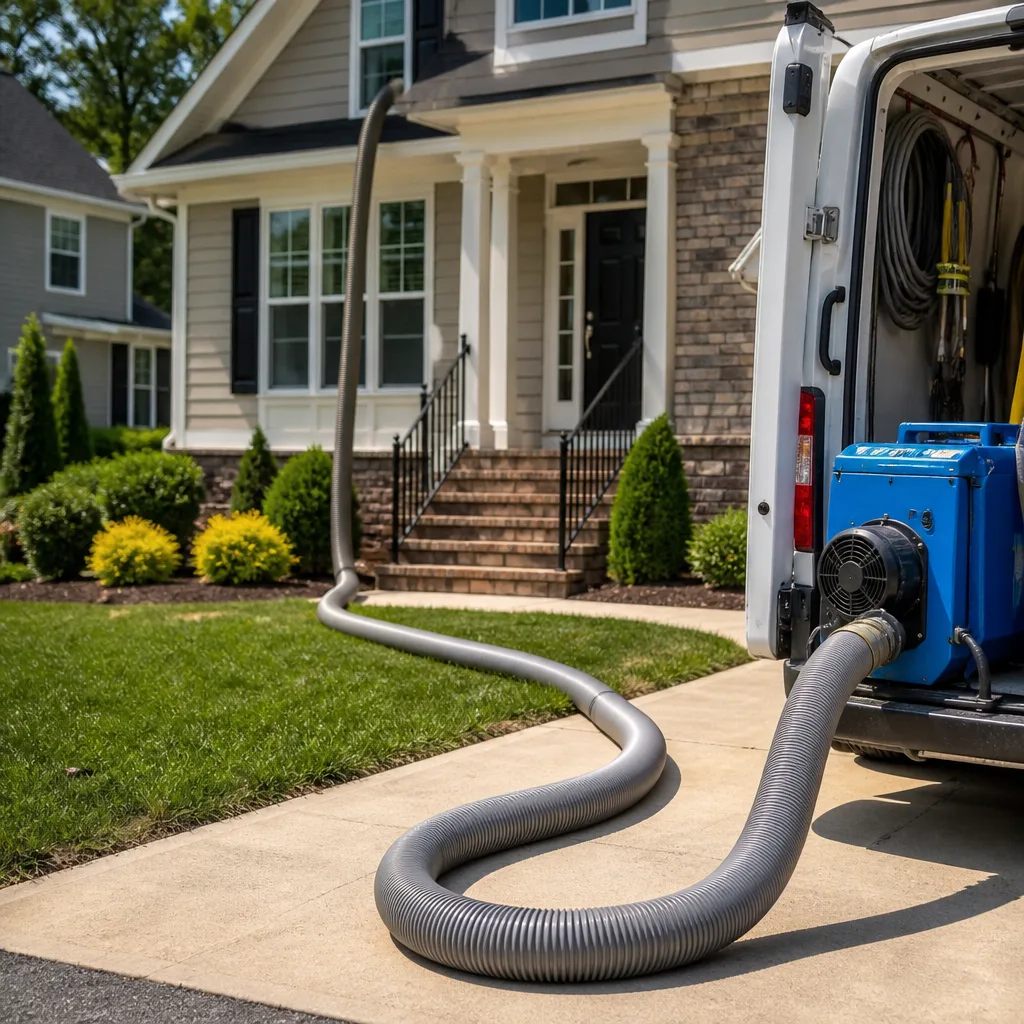 Whole-home duct cleaning
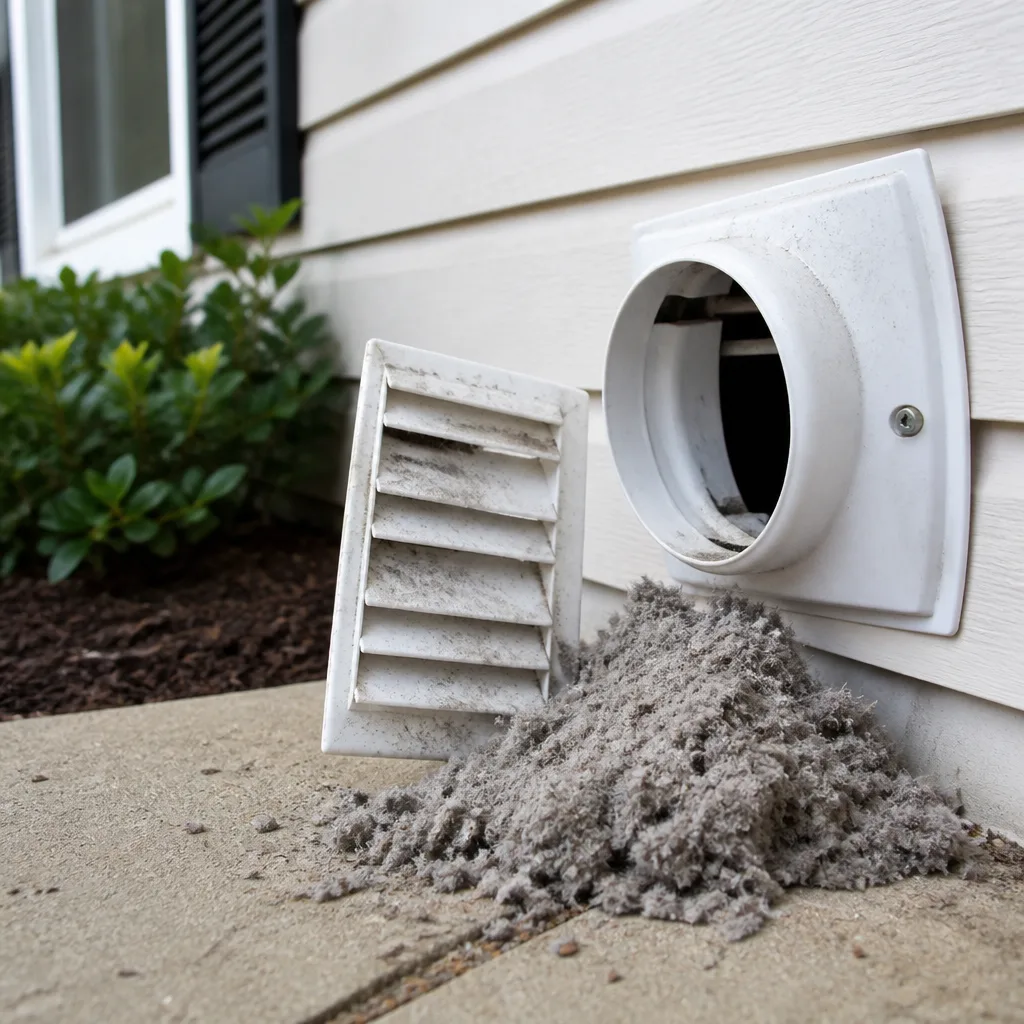 Dryer vent cleaning
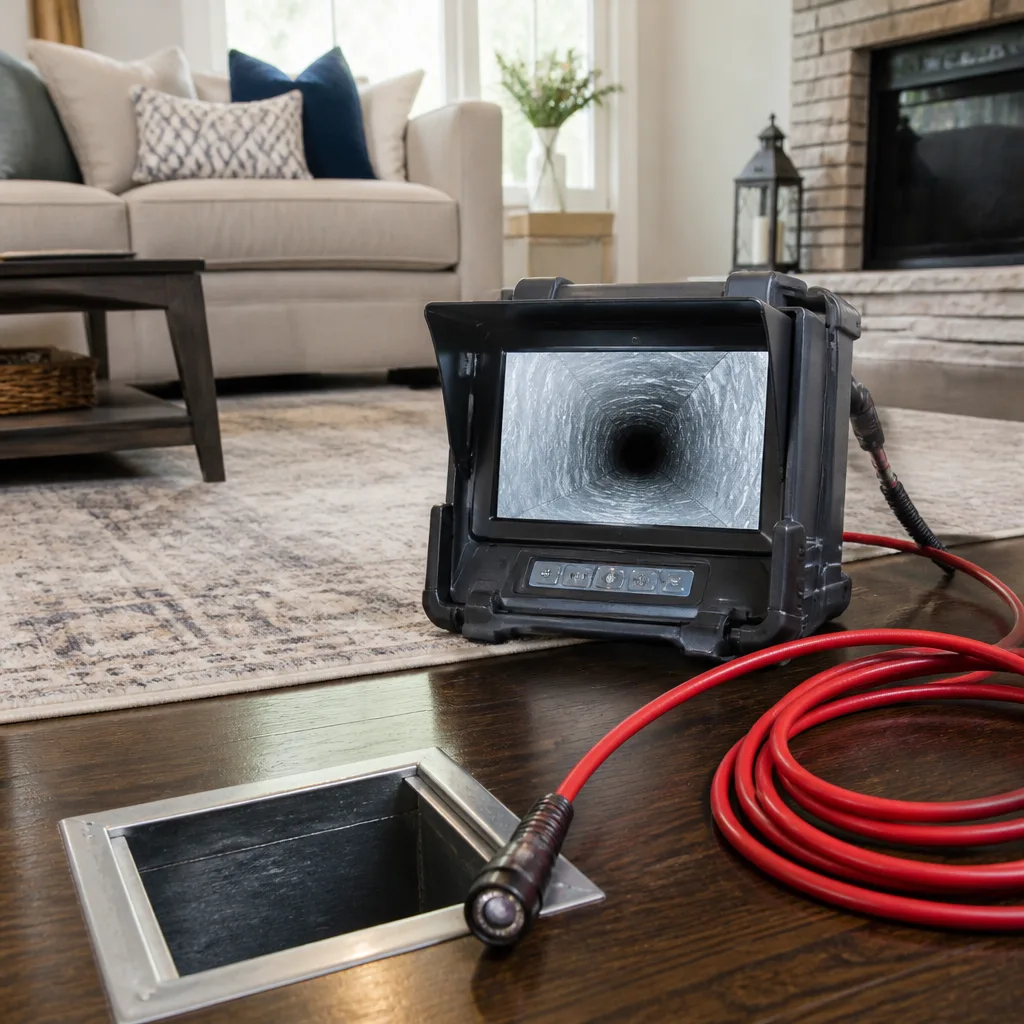 Camera inspection
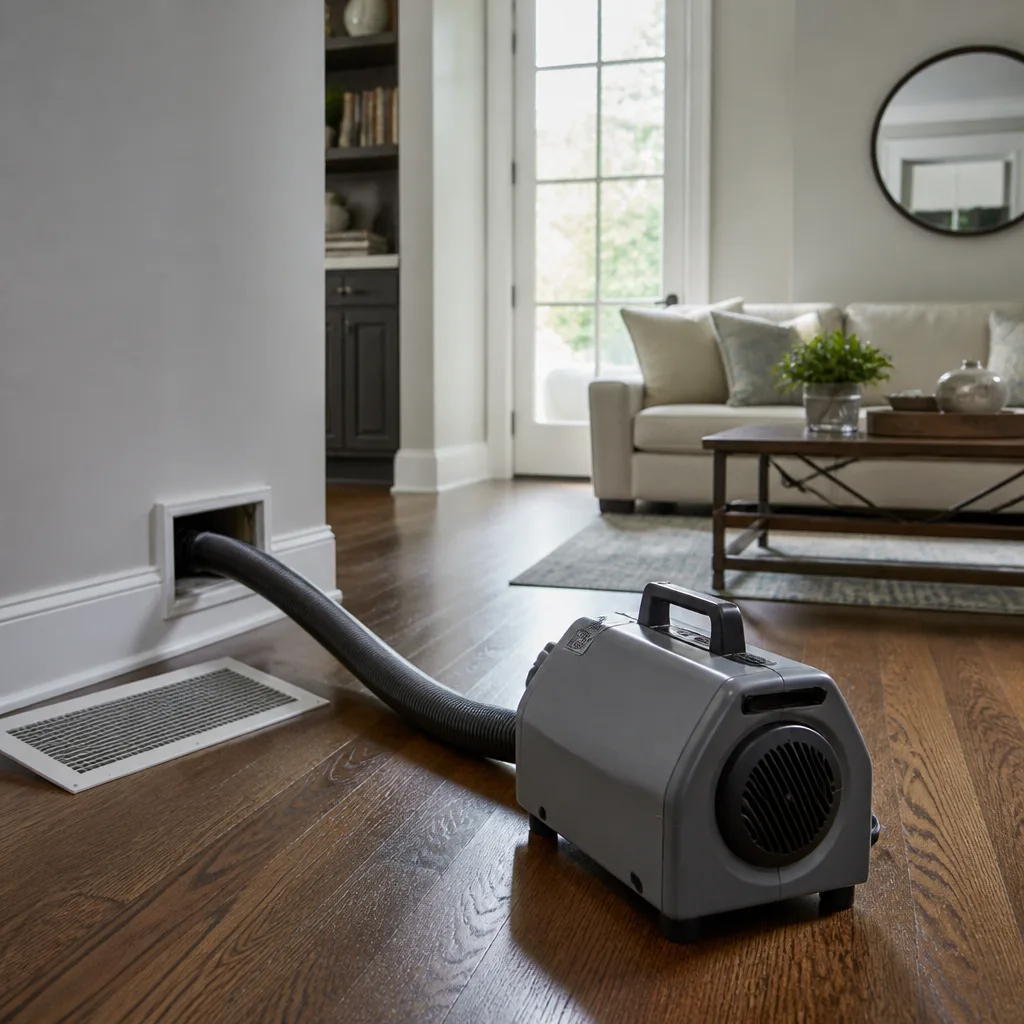 Sanitizing & deodorizing
Whole-system duct and dryer vent check with before-and-after photos - you see exactly what came out of your vents
That "$99 whole-house special" is a bait ad - the real number appears once they are in your hallway, or the "clean" is a shop-vac at the register. We photograph the inside of your ducts before and after instead.
Air Duct Cleaning Troubleshooting in Northeast Philadelphia: Common Problems and How to Fix Them
Most people assume a musty smell means the ducts need cleaning. Often it doesn’t. “My ducts smell musty” can describe mold growing on the internal liner, a dead animal in the plenum, a clogged condensate line backing moisture into the system, or a dirty evaporator coil, and each of those has a different fix and a different price. Guessing wrong means paying to clean ductwork that was never the problem. This guide maps the symptoms Northeast Philadelphia homeowners actually report to the mechanical and contamination sources behind them, so you can describe what’s happening in your house accurately before anyone arrives. That description is what separates a one-visit fix from a second and third call.
Quick Answer
Airflow, odor, and dust problems in Northeast Philadelphia homes usually trace back to one of four causes: debris or contamination inside the duct system, a physical failure like collapsed flex duct or a disconnected joint, a blocked or unbalanced register, or a dirty blower wheel and evaporator coil that starve the whole system of air. The symptom alone doesn’t tell you which. Matching the symptom to the right cause before you call is what stops you from paying for duct cleaning when the real issue is a crushed branch run behind a finished wall.
Styles & brands we work with
- Whole-home duct cleaning
- Dryer vent cleaning
- Camera inspection
- Sanitizing & deodorizing
Table of Contents
- Why Is One Room Always Weak on Airflow?
- Why Do the Ducts Smell Musty After Cleaning?
- How Do Northeast Philadelphia Row-Home Duct Layouts Create Hidden Debris Pockets?
- Why Is There More Dust Right After a Cleaning?
- What Should Professional Duct-Cleaning Equipment Actually Do?
- How Do You Verify the Cleaning Worked?
- When Is It a Cleaning Job and When Is It a Repair Job?
Why Is One Room Always Weak on Airflow?
Weak airflow to a single room is almost never a duct-cleaning problem first. It’s usually a physical restriction or a balance issue, and the four common causes look identical from the thermostat. Here’s how to tell them apart before you spend money.
- Blocked or closed register. Check the damper lever on the supply register itself and any adjustable floor or wall grille in the room. A partly closed damper in a spare bedroom is the cheapest cause to rule out.
- Collapsed or crushed flex duct. Flexible duct run through tight joist bays or pinched behind a finished ceiling can collapse over time or get crushed during other work. If the register has decent pressure when you hold a hand to it but the room stays cold, suspect the run between the trunk and the boot.
- Disconnected joint. A boot that has pulled away from the subfloor, or a branch that slipped off its collar, dumps conditioned air into a wall cavity or crawlspace. The room gets weak, the rest of the house gets a little better, and the energy bill notices.
- Blower wheel buildup. When the blower wheel inside the air handler is coated in dust, every register in the house drops at once, not just one. If the whole house feels weak, look here before you look at the ducts.
In Northeast Philadelphia’s older housing stock, the culprit is frequently the branch run feeding a second-floor front bedroom, where ductwork was squeezed through spaces the original layout never intended. If the room was always weak, it’s a design and balance question. If it got worse gradually, it’s restriction or buildup. Knowing which narrows the visit fast.
If the whole house is weak and the filter is clean, that’s a system problem rather than a single-run problem, and HVAC cleaning addresses the coil and blower side where the airflow actually starts.
Why Do the Ducts Smell Musty After Cleaning?
Musty odor after a cleaning almost always means the coil or the drain pan was never touched, not that the duct work was done wrong. Duct cleaning removes debris from the ducts. It does not clean the evaporator coil, the condensate pan, or the plenum surfaces where moisture sits and biological growth takes hold. If those stay dirty, the smell keeps coming back the moment the system runs again.
Follow the odor backward through the system:
- Smell strongest at the supply registers when the blower starts: the source is upstream, in the air handler, coil, or plenum, not in the branch ducts.
- Smell strongest in one room: that run is the source, often a boot sitting over a damp crawlspace or an unconditioned chase.
- Smell strongest near the return grille: the return path or filter housing needs attention.
- Smell like decay rather than damp: something organic is in the system, and the plenum and trunks need to be opened and inspected, not just vacuumed.
Humidity matters here. Philadelphia summers push indoor humidity high enough that a coil which never fully drains stays wet, and wet surfaces grow things. Cleaning the ductwork while leaving a fouled coil and a standing drain pan in place is treating the symptom. In our experience, musty complaints that come back a few weeks after a cleaning are almost always coil-side or drain-side. A proper HVAC cleaning covers the evaporator coil, blower assembly, and drain pan, and a sanitizing treatment applied to clean surfaces lasts far longer than one applied over debris.
How Do Northeast Philadelphia Row-Home Duct Layouts Create Hidden Debris Pockets?
The row homes and twins that make up most of Northeast Philadelphia were built long before anyone designed ductwork for central air. Original systems were often gravity or radiator heat, and when central air arrived, duct runs were retrofitted into whatever space existed: between joists, along party walls, through closets, and above finished ceilings. The result is a system with long trunk-and-branch runs, very few access panels, and turns the installer had to make in a hurry.
Those layouts create specific places where debris collects and where a fast cleaning misses it:
- Long horizontal trunk runs above finished ceilings where dust settles along the bottom of the duct and a short vacuum stroke never reaches the middle.
- Tight elbows and offsets stuffed into joist bays, which act as traps for lint, pet hair, and construction dust.
- Boots and subfloor penetrations where the gap between the duct and the floor framing lets dirt fall into the cavity around the boot.
- Return chases shared with plumbing or wiring in older homes, where the “return duct” is really a framed cavity lined with whatever was on hand.
These are mechanical realities, not horror stories. A duct system with few access panels has to be opened at more points to be cleaned properly, and a technician who won’t cut access where the system requires it can only clean what’s visible. That’s part of why air duct cleaning in this housing stock takes real setup time. If a quote sounds like a quick in-and-out, ask where the access points will go and whether they’ll be sealed afterward.
Why Is There More Dust Right After a Cleaning?
A short burst of dust right after a cleaning is normal and usually settles within a day or two. A cleaning that loosens debris without capturing it under negative pressure pushes that debris into the living space, where it lands on furniture and inside the same ducts it came from. If dust keeps appearing for more than a few days, the capture side of the job was inadequate.
What’s happening mechanically: a proper cleaning agitates debris off the duct walls with a rotary brush and simultaneously holds the entire system under negative pressure with a HEPA vacuum connected at the main trunk. Agitation without capture just moves the problem. The vacuum must be sized for the system and sealed tightly at the connection point, because any leak in that seal lets the vacuum pull room air instead of duct air.
After the cleaning, a technician should run the system and check the filter within a day or two, since the filter catches anything the vacuum didn’t. If the filter loads up fast, replace it, then judge the result. Persistent dust after a week of normal living usually points to a cracked or disconnected return, a leaky plenum, or a dirty blower wheel re-contaminating the supply side. That’s a repair question, not another cleaning.
What Should Professional Duct-Cleaning Equipment Actually Do?
Professional duct equipment should agitate and capture at the same time, under measurable negative pressure, with enough airflow to move debris through the whole run. Consumer vacuums and shop-vacs can’t do this. Their airflow drops to almost nothing once connected to a duct system, and they have no way to hold a trunk under negative pressure.
What contractor-grade setups bring to a Northeast Philadelphia row home:
- Rotary brush agitation. A Rotobrush-style rotary brush is driven through each run to break debris off the duct walls rather than just pulling at loose surface dust. Long trunk runs and tight elbows need that mechanical contact.
- Commercial HEPA vacuum and air mover. Nikro equipment is built for commercial HVAC contractors: a HEPA vacuum connected at the trunk, with airflow rated to keep the system under negative pressure while the brush runs.
- Compressed-air whips and access tools. Branch runs, boots, and returns get reached through openings cut at the right points and sealed afterward, not fished at from one end.
- Filtration and air-quality equipment for remediation-level work. When contamination is heavier than routine dust, Abatement Technologies equipment supports higher-grade air handling.
Equipment isn’t the whole story, but it’s the part you can verify. Ask what vacuum and what brush system will be used. A company that names its equipment can explain why it works; a company that can’t probably doesn’t own it. And equipment only helps if the duct system is sound to begin with, which is why air duct cleaning Northeast Philadelphia done right starts with checking the system before the vacuum comes out.
How Do You Verify the Cleaning Worked?
You can verify a duct cleaning with a smartphone anemometer app and five minutes at each register. The test is simple: measure airflow at the supply registers before the work and again after, and compare. A meaningful improvement shows up as a higher reading at registers that were weak, more even readings across rooms, and less dust at the grilles after the system runs for a day.
Here’s how to run the check:
- Before the cleaning: hold the phone’s anemometer at each return and supply grille, at a consistent distance, and record the reading and the room name.
- After the cleaning: repeat the measurements at the same grilles, from the same distance, in the same order.
- Compare room to room, not just grille to grille. The goal is even distribution. If one room went from very weak to roughly even with the rest, the branch run was the problem and it’s now clear.
- Look at the grilles. A clean supply grille after a week of running tells you more than a fresh-cleaned one. Check for dust streaks and debris settling on the vanes.
Two caveats. Phone sensors are directional, so small differences in angle change the reading, which makes the comparison useful but not exact. And if airflow doesn’t improve anywhere, the restriction is mechanical (collapsed run, disconnected boot, dirty blower), and cleaning alone won’t fix it. That’s when dryer vent cleaning isn’t the answer either; a proper inspection of the duct runs and air handler is the next step. Ask for before-and-after photos of your own ducts as part of the record.
When Is It a Cleaning Job and When Is It a Repair Job?
Cleaning removes contamination. Repair restores the system’s ability to move air and hold it where it belongs. If the duct system is leaking, crushed, or open to a cavity, cleaning it is cleaning a broken system, and the problem will return. The tell is usually in what the symptoms do after cleaning: if airflow and dust improve across the board, it was a cleaning job. If nothing changes, or one room stays weak, it’s a repair job.
Repair and sealing addresses the root cause of energy loss and re-contamination: disconnected joints, crushed flex duct, leaky plenum seams, unsealed boots, and return chases that draw attic or cavity air into the system. Sealing those gaps does two things at once. It stops the debris source, and it lets the system deliver the air it was designed to deliver. In older Northeast Philadelphia homes, leaks at the plenum and boot are among the most common and most fixable energy losses in the whole HVAC system.
Which brings the sequence: clean the system, repair and seal the leaks, then treat the surfaces and consider filtration. Doing it in that order is what makes the result last. What we clean, we can also repair and seal, which matters when the inspection turns up a joint that will just let everything back in.
Common Mistakes to Avoid
- Assuming every smell means the ducts are dirty. A musty smell after a cleaning points at the coil, drain pan, or plenum, and cleaning the ducts again won’t fix it.
- Measuring airflow with your hand. A hand tells you air is moving, not how much. A phone anemometer or a proper reading tells you whether the cleaning actually changed anything.
- Skipping the return side. Returns carry as much debris as supplies, and in many older Northeast Philadelphia homes the return is a framed cavity that needs opening and sealing, not a quick vacuum.
- Trusting a per-vent price. Vent counts don’t reflect the length of trunk runs or the number of access points a row home needs. A whole-system price per system is the only honest number.
- Letting a collapsed flex duct get cleaned instead of replaced. Cleaning a crushed run leaves the restriction in place and the money spent.
- Not asking what equipment will be used. A shop-vac isn’t a rotary brush and a HEPA vacuum, and the result won’t be the same.
- Rebuilding access panels improperly. If access was cut to reach the ducts, it should be sealed correctly when the job ends, or the system leaks air from that point forward.
See the difference
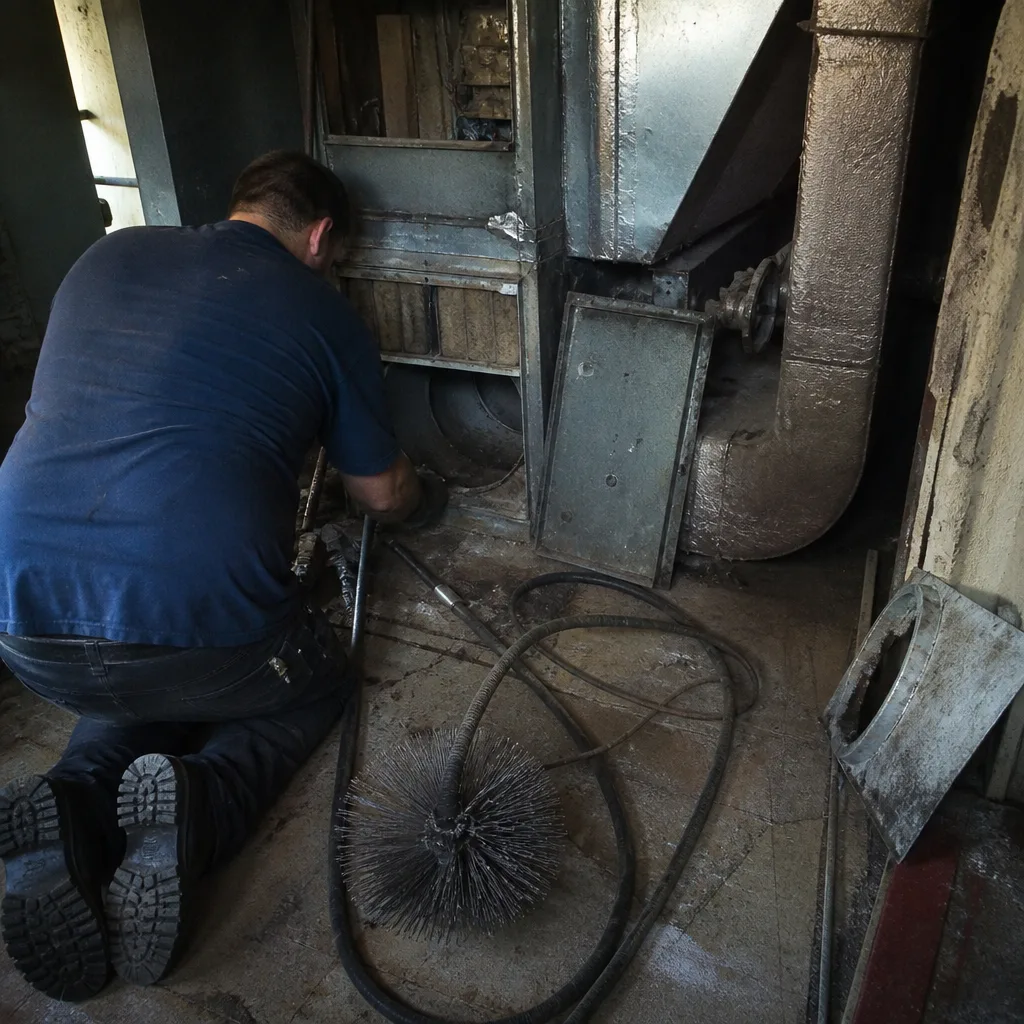 Before
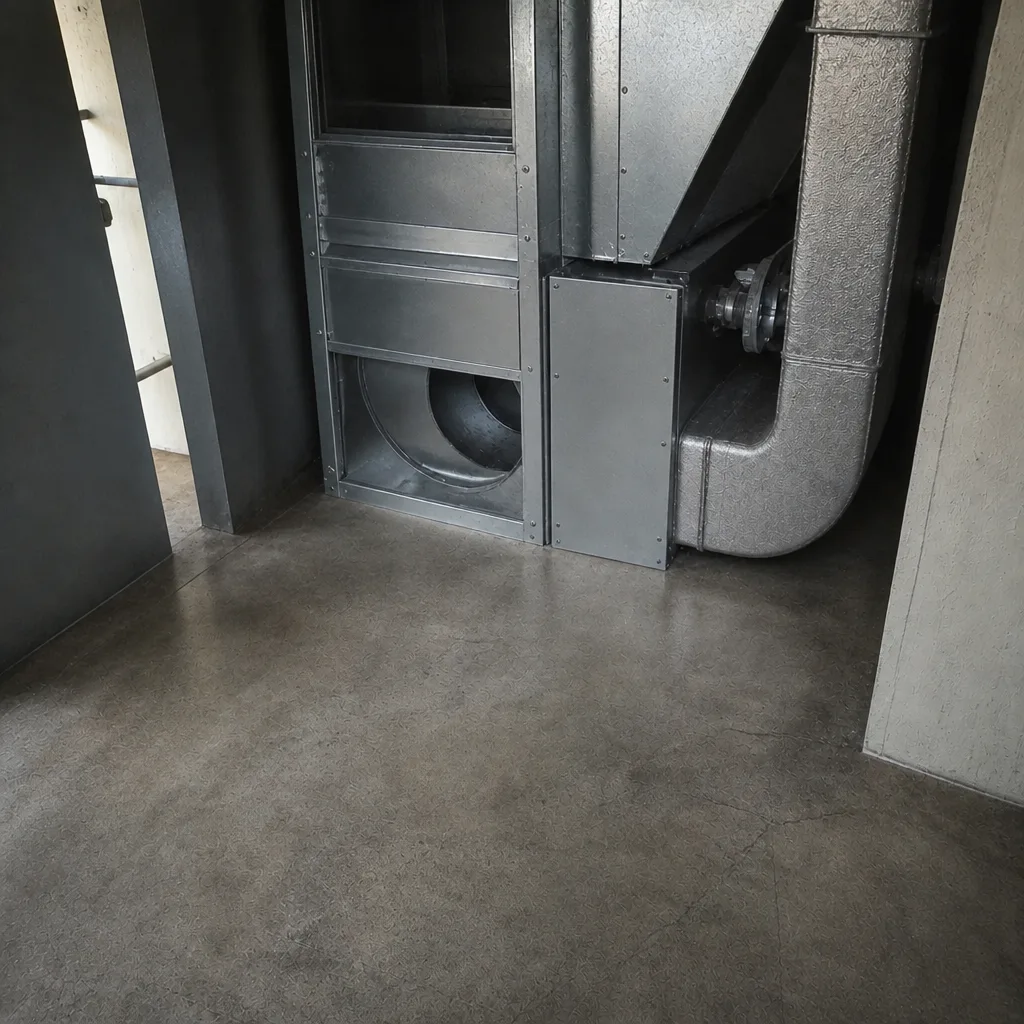 After
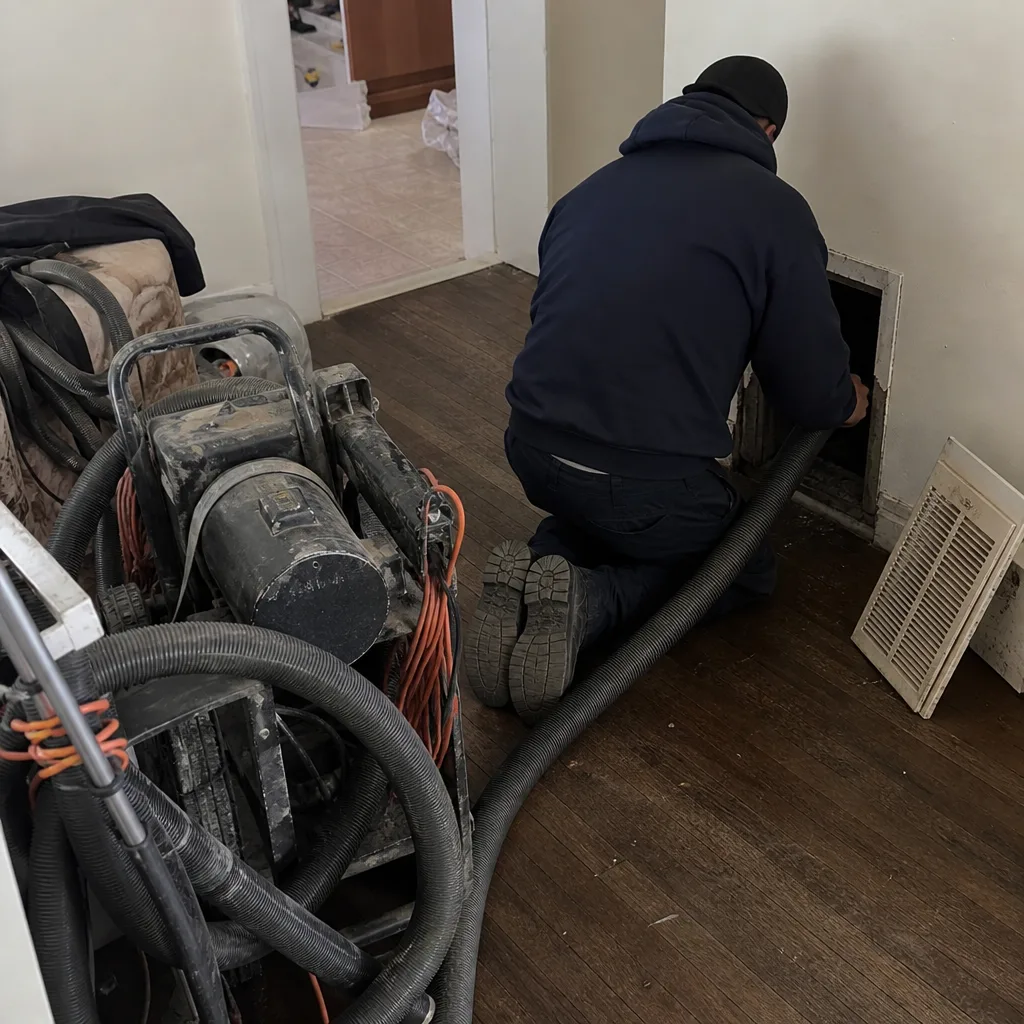 Before
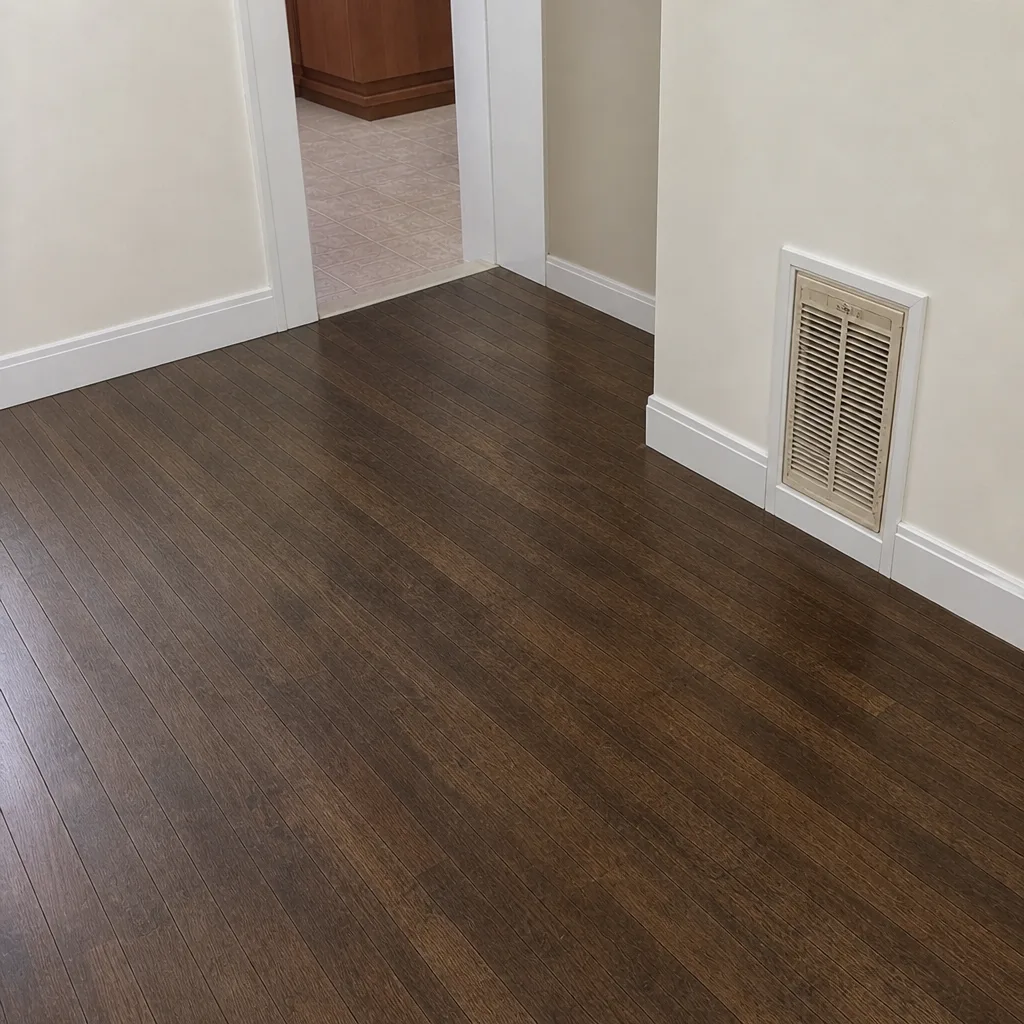 After
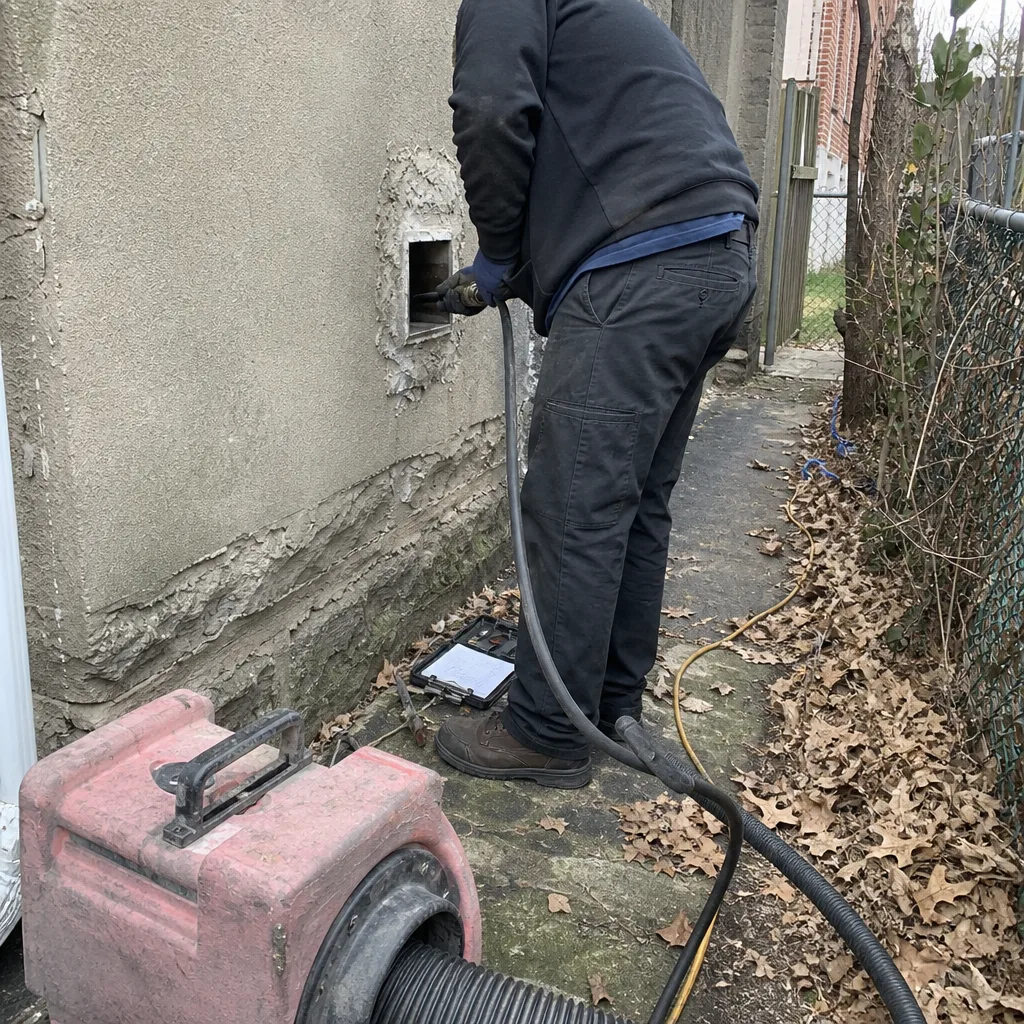 Before
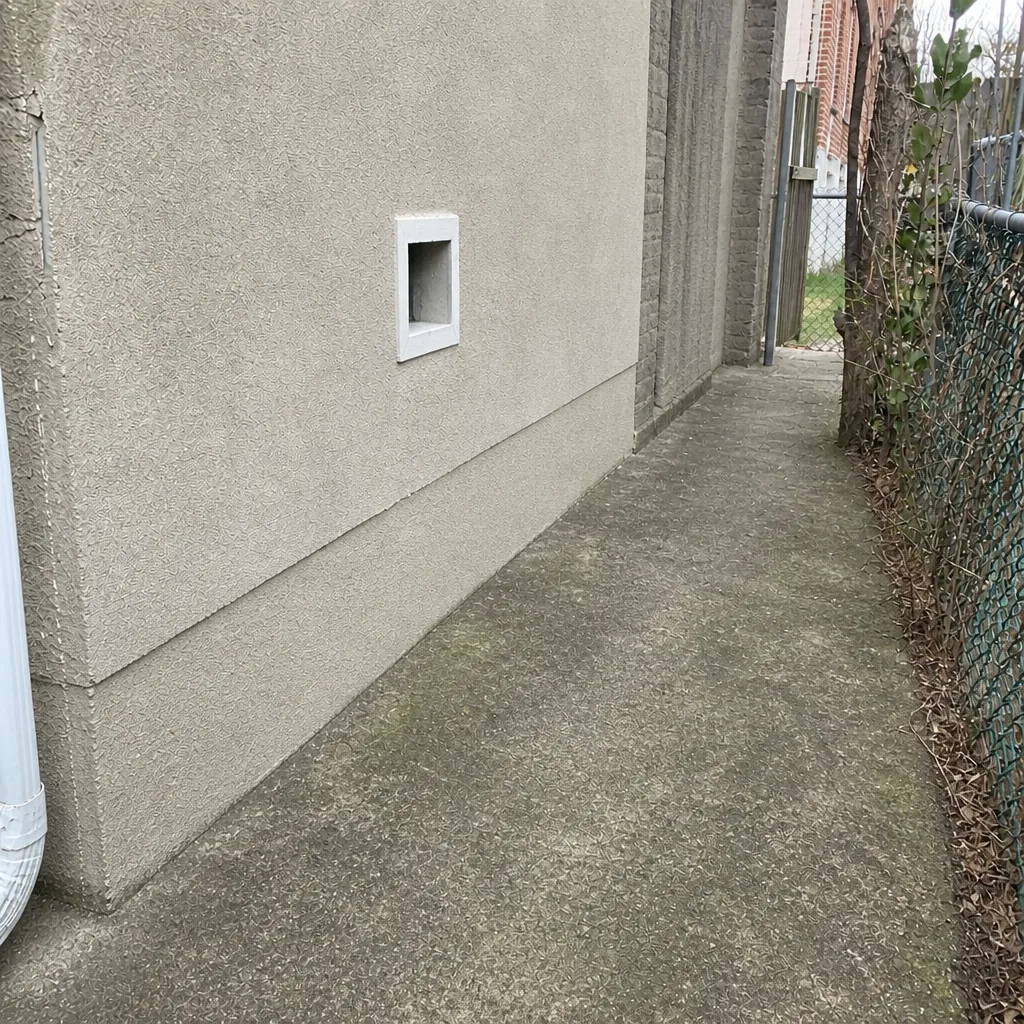 After
When to Call a Professional
Call when a room stays cold or weak after you’ve checked the register dampers, when a smell returns within weeks of a cleaning, when you see dust puffing from a grille, or when a recent renovation has left construction dust in the system. Call if you’ve just moved into a Northeast Philadelphia home and have no record of when the ducts were last cleaned, or if the HVAC system is older and the airflow has dropped gradually over a couple of seasons. Call if a technician wants to clean ductwork while a crushed run or unsealed boot is visibly in the picture, because the seal has to come first.
Air Duct Cleaning Northeast Philadelphia offers free estimates in Northeast Philadelphia. Call (833) 508-9983. We answer 24/7. Fast dispatch from 7am to 7pm, Sunday through Friday. One flat price per system agreed before work starts, before-and-after photos of your own ducts, and a written estimate that sets the final price. Our technicians have up to 14 years of experience, the local pro is licensed and insured as their state requires, and satisfaction is guaranteed.
Frequently Asked Questions
Air duct cleaning in Northeast Philadelphia is usually priced per system, not per vent, and the written estimate sets the final price. Asking for a per-system price is the single best way to compare quotes in a city where the housing stock varies so much between a small row home and a larger twin.
Cheap quotes usually mean less equipment, fewer access points, or a per-vent price that grows as the job goes on. A price that starts low and climbs once the technician is inside is the pattern homeowners most often get burned by, which is why one flat price per system agreed before work starts tells you more than any coupon figure.
Ask for before-and-after photos of your own ducts and compare register airflow readings taken before and after the cleaning. We provide both, and the phone-anemometer check above lets you confirm the result yourself. If a company can’t show the work, don’t accept the invoice. Call (833) 508-9983 for a free estimate.
There’s no fixed schedule, and anyone who tells you “every year” is selling a calendar rather than a service. Clean when there’s evidence: visible dust at the grilles, a recent renovation, a new-to-you home with unknown history, pets, smokers, or a persistent smell you’ve traced to the system. Otherwise, a sealed and properly filtered system can go considerably longer.
No. Musty smells often come from a dirty evaporator coil, a standing drain pan, or damp surfaces in the plenum, not from duct work itself. If a cleaning doesn’t clear the smell, the inspection needs to move to the air handler and drain. Call (833) 508-9983 and we’ll trace it.
Not effectively, and it’s not a good idea for any part of the system tied to the air handler. A shop-vac can’t hold a trunk under negative pressure or agitate debris off duct walls, and reaching the blower or coil without the right equipment risks damage. Contractor-grade rotary brush and HEPA vacuum setups exist for a reason. Get a free estimate instead.
The Bottom Line
The symptom is rarely the diagnosis. Weak airflow is usually a restriction or a blower problem, not dirty ducts. A musty smell after cleaning is usually the coil or drain, not a cleaning failure. Dust after cleaning is a capture problem, or a leak that was never sealed. In Northeast Philadelphia’s older row-home layouts, the debris pockets and the leaks live in the same places, so clean, repair, and seal in that order. Describe what your system is doing, not just what it smells like, and you’ll get the right fix the first time rather than the second. That’s the whole point of troubleshooting before you schedule.
Written by the team at Air Duct Cleaning Northeast Philadelphia.